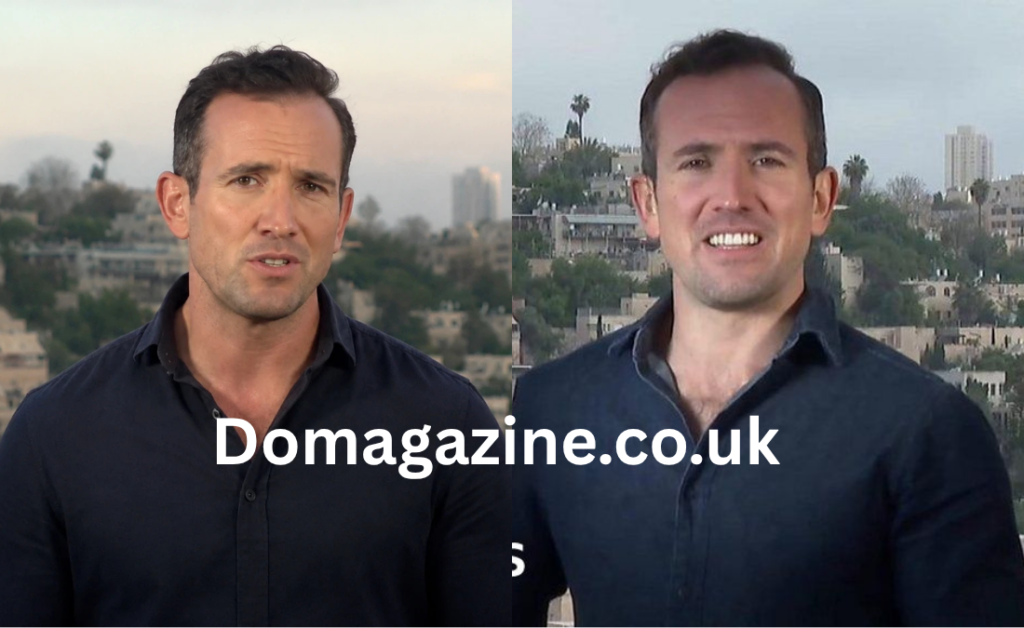

When people switch on the news during a major international crisis, there is a good chance they will see Hugo Bachega standing in the middle of it, microphone in hand, explaining events that most of us only read about from a safe distance. Hugo Bachega has become one of the more recognisable faces of international reporting, not because he chases attention, but because his work keeps placing him at the center of history as it unfolds. From the early days of his career in Brazil to his current reporting from the Middle East, Hugo Bachega has built a body of work that values accuracy over drama and clarity over spectacle. This article looks at who Hugo Bachega is, how he built his career, and why audiences around the world have come to trust his reporting.
Early Life and Roots in Brazil
Hugo Bachega was born and raised in Brazil, a country whose lively political debates and social complexity shaped his early curiosity about the wider world. Growing up in this environment gave him an early appreciation for how news shapes public understanding, and it planted the seeds of a career that would eventually take him far from home. Portuguese remains his first language, and his Brazilian identity continues to shape how he approaches stories, particularly those involving ordinary people caught up in extraordinary events. Unlike many international broadcasters who come from a narrow set of backgrounds, Hugo Bachega brings a Global South perspective into newsrooms that have traditionally been dominated by Western voices, and that perspective often shows in the way he frames a story.
Education and the Foundations of a Journalism Career
Before stepping into international reporting, Hugo Bachega pursued formal studies in media and communications, building a foundation in reporting ethics, interviewing technique, and the discipline required to verify information quickly under pressure. Journalism school does not teach someone how to stand calmly while explosions sound in the background, but it does teach the habits that make accurate reporting possible: checking sources twice, separating fact from rumor, and resisting the urge to speculate. These habits would later define how Hugo Bachega approached even the most chaotic assignments of his career.
Cutting His Teeth at Reuters
Every long career has a starting point, and for Hugo Bachega that starting point was an internship and later a reporting role with Reuters in Brazil. Working for a global news agency meant operating on a constant deadline, writing tight and factual copy, and learning to verify stories at speed without sacrificing accuracy. This period gave Hugo Bachega the technical grounding that wire service journalism is known for, and it is often cited as the training ground that prepared him for the demands of international broadcast reporting. Many BBC correspondents share a similar background, having learned the fundamentals of speed and precision at a news agency before moving into television and radio.
Joining BBC News and Becoming a Foreign Correspondent
The defining shift in his career came when Hugo Bachega joined BBC News, an organisation known worldwide for its commitment to balanced, fact-driven reporting. At the BBC, Hugo Bachega moved away from desk-based agency work and stepped into the role of a foreign correspondent, a position that put him directly into the field rather than behind a newsroom screen. Over the years, he has been based in several major cities and conflict zones, including postings connected to North African developments, European affairs, and the ongoing crises in Eastern Europe and the Middle East. Each posting added a new layer of experience, but it was his work in active conflict zones that turned Hugo Bachega into one of the BBC’s most depended-upon correspondents.
Reporting From Ukraine
When the war in Ukraine escalated, Hugo Bachega was among the BBC journalists sent to cover the conflict directly from the ground, including reporting connected to the city of Kyiv during some of its most dangerous periods. Field reporting during an active war requires more than courage; it requires the ability to stay composed while gathering accurate information from people who are frightened, displaced, or grieving. Viewers who followed his coverage often noted how Hugo Bachega managed to humanize the war, focusing not only on military movements but on the everyday lives of people trying to survive amid the destruction. This ability to combine hard news with human storytelling has become one of his clearest professional signatures.
Middle East Correspondent Based in Beirut
In more recent years, Hugo Bachega has taken on the role of Middle East correspondent, reporting from Beirut during a period of intense regional conflict involving Lebanon, Gaza, and the wider tensions across the region. His reporting during the Israel-Hezbollah conflict, including coverage of attacks on civilian areas and the eventual ceasefire, placed him squarely in some of the most sensitive and dangerous reporting environments in the world. Hugo Bachega has documented stories ranging from displaced families returning to damaged homes to attacks on emergency workers, always delivering the facts with restraint rather than commentary. This steady, careful approach has helped Hugo Bachega maintain credibility even when reporting on deeply contested and emotionally charged events.
A Reporting Style Built on Calm and Clarity
What sets Hugo Bachega apart from many broadcasters is not flashy delivery but a calm, measured tone that holds steady even in high-pressure situations. His Brazilian-accented English has become something of a signature, instantly recognisable to regular BBC viewers and a quiet reminder that international journalism benefits from voices outside the traditional British or American mould. Hugo Bachega rarely inserts personal opinion into his reporting, preferring instead to let the facts and the voices of people on the ground carry the story. This restraint is increasingly rare in an era of opinion-driven media, and it is one of the main reasons audiences describe his reporting as trustworthy.
A Private Life Kept Away From the Cameras
Despite his public visibility, Hugo Bachega has kept his personal life almost entirely out of public view. There is no confirmed public information about his marital status, family life, or personal relationships, and he has not discussed these matters in interviews. This is a common pattern among correspondents who report from conflict zones, where personal privacy is often treated as a matter of security as much as preference. What the public does know about Hugo Bachega comes almost entirely from his professional work rather than personal disclosures, which fits the traditional model of a foreign correspondent whose career is built around the story rather than personal branding.
Why Audiences Continue to Trust His Reporting
In a media landscape often criticized for sensationalism, Hugo Bachega has built a reputation around the opposite approach. His reporting tends to prioritize context over shock value, explaining why an event matters rather than simply describing what happened. Audiences who have followed his work across Ukraine, Lebanon, and other conflict regions often point to his consistency: the same calm tone, the same careful sourcing, and the same focus on the human cost of conflict, regardless of where in the world he is reporting from. That consistency is part of why Hugo Bachega has become a familiar and trusted name within international news coverage.
Conclusion
Hugo Bachega represents a style of journalism that values substance over spectacle. From his early training in Brazil and his formative years at Reuters to his current work as a BBC foreign correspondent reporting from some of the world’s most volatile regions, his career reflects steady growth built on skill rather than self-promotion. Hugo Bachega’s reporting from Ukraine and the Middle East has shown audiences the human side of conflicts that can otherwise feel distant and abstract. As global tensions continue to shift, it is likely that Hugo Bachega will remain one of the BBC’s most relied-upon voices for clear, accurate, and humane reporting from the frontlines of major world events.
Frequently Asked Questions
Who is Hugo Bachega?
Hugo Bachega is a Brazilian journalist and BBC foreign correspondent known for reporting from conflict zones, including Ukraine and the Middle East.
Where does Hugo Bachega currently report from?
He is currently based in Beirut, covering the Middle East as the BBC’s correspondent for the region.
Did Hugo Bachega work anywhere before the BBC?
Yes, he began his journalism career with Reuters in Brazil before moving into international broadcast reporting.
Is Hugo Bachega married or in a relationship?
There is no publicly confirmed information about his marital status, as he keeps his personal life private.
Why is Hugo Bachega known for his reporting style?
He is recognised for his calm, factual delivery and his focus on the human impact of the conflicts he covers.