

Keeping up with New York City building rules can feel like a lot, especially if you are responsible for the safety of your building’s facade. Local Law 11, also called the Facade Inspection Safety Program (FISP), is more than paperwork. It is a safety rule meant to protect people on the street and help buildings stay in good shape. So what should you expect if you hire a Local Law 11 best contractor?
You should expect a clear, organized, expert-led process that takes a stressful requirement and turns it into a plan to protect your property. The best contractors do more than patch visible issues. They help manage the full process-inspection support, repair planning, repair work, and final filings-so your building stays safe, meets DOB rules, and holds up over time.
This guide explains the main services, traits, and steps that define strong Local Law 11 contractor support.
What Is Local Law 11 and Who Needs Contractor Services?
Local Law 11 (FISP) is NYC’s main program for facade safety. It became mandatory after serious accidents, including a fatal 1980 incident caused by falling masonry. The law requires regular checks of exterior walls and related parts on buildings taller than six stories across all five boroughs. The goal is public safety: find unsafe conditions and fix them before they can harm pedestrians, residents, or nearby property.
Following Local Law 11 is required by law. It helps keep NYC’s tall buildings safe, especially since many are close together and share tight sidewalks and streets. Following the rules closely matters for public safety and for protecting the city’s buildings.
Which Types of Buildings Require Local Law 11 Compliance?
Local Law 11 applies to almost all buildings in NYC that are over six stories. This includes many types of properties: residential towers, commercial buildings, institutional buildings, and mixed-use buildings. If your property is a condo, co-op, office building, or a combination, and it is over six stories, it is usually covered by FISP.
Some buildings are exempt. Buildings that are six stories or fewer are usually not included. Also, some buildings built fully with certain lightweight materials may be exempt, but that decision depends on NYC Department of Buildings (DOB) review and approval. The building owner is responsible for confirming whether the building must follow the Facades Inspection and Safety Program.
Why Are Qualified Contractors Essential for Local Law 11 Work?
Successful Local Law 11 compliance is not just about getting an inspection done. It depends on working with qualified contractors who have the right licenses, strong experience, and solid project management. NYC rules are detailed, and penalties can be serious, so expert support matters.
Hiring the wrong contractor can create problems fast. A weak contractor may take shortcuts, charge for unnecessary work, or ignore code details, leading to poor repairs and future risk. Missing deadlines, doing incomplete repairs, or filing the wrong paperwork can lead to fines, legal exposure, and safety hazards. A strong contractor helps keep repairs high quality and cost-effective while lowering risk to people and to your building.
How Do the Best Local Law 11 Contractor Services Work?
Local Law 11 runs on a repeating five-year cycle. The best contractors treat this cycle as a planned process, starting early and staying involved until repairs and filings are completed.
This approach follows a clear set of steps: early review, hands-on inspections, formal reporting, and (if needed) repair work done the right way. It also takes close coordination between the owner, the Qualified Exterior Wall Inspector (QEWI), and the DOB. A strong contractor helps keep these moving parts aligned and keeps the project on track.
What Steps Are Involved in a Local Law 11 Inspection and Repair Project?
A Local Law 11 project starts with a critical examination by a Qualified Exterior Wall Inspector (QEWI). This is not a quick look from the sidewalk. It involves close-up inspections of the facade and related parts, often using scaffolding, rope access, or other approved methods. The inspector reviews exterior walls, cladding, parapets, copings, cornices, balconies, terraces, railings, guardrails, fire escapes, window lintels, shelf angles, anchors, and other exterior items like A/C units, lighting, and signs.
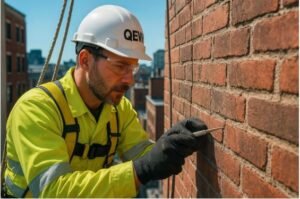
After the inspection, the QEWI prepares a technical report and files it with the DOB through DOB NOW: Safety. The report assigns a condition status and lists required actions. If repairs are needed, the contractor plans and completes the work while following safety rules and code requirements. After repairs, the QEWI re-inspects as needed and files updated reports to confirm compliance.
What Is the Role of a Qualified Exterior Wall Inspector (QEWI)?
The QEWI is central to Local Law 11. A QEWI must be a New York State licensed Professional Engineer (PE) or Registered Architect (RA) in good standing with the state and the NYC DOB, and approved by the DOB to file facade reports. Only QEWIs can perform FISP inspections in NYC.
The QEWI performs the examinations and uses their knowledge of NYC codes, building materials, and structural behavior to spot problems and risks. They look beyond surface issues and may use investigative methods to find the cause of damage. The QEWI prepares the technical report, assigns the facade classification, and submits all required paperwork through DOB NOW: Safety, connecting the owner’s side to DOB requirements.
How Often Must Inspections and Repairs Be Completed?
Local Law 11 inspections are required every five years, following DOB filing cycles. As of 2026, the active cycle is Cycle 10, which started on February 21, 2025, and runs through February 21, 2030. Each five-year cycle is split into three sub-cycles (A, B, and C) to spread out filings across the city’s roughly 16,000 covered buildings.
Your building’s sub-cycle is based on the last digit of its tax block number. For Cycle 10: buildings ending in 4, 5, 6, or 9 are in Sub-Cycle 10A (filing window: Feb 21, 2025 – Feb 21, 2027); endings in 0, 7, or 8 are in Sub-Cycle 10B (filing window: Feb 21, 2027 – Feb 21, 2029); and endings in 1, 2, or 3 are in Sub-Cycle 10C (filing window: Feb 21, 2029 – Feb 21, 2030). Owners must file within their window, and SWARMP items must be fixed before the next cycle. Unsafe conditions require immediate protection for the public and repairs within 90 days of the report filing, or one year from the critical examination, with an amended report filed within two weeks after correction.
Key Qualities of Leading Local Law 11 Contractors
Finding a truly strong Local Law 11 contractor means looking past basic skills and checking for qualities that make the work smoother and safer. The best firms combine technical ability, a strong safety mindset, code knowledge, and clear communication so owners are not left guessing.
A contractor’s reputation and ethics matter. They should act like a long-term partner, not just a crew that shows up to patch cracks. They should understand DOB requirements, facade repair work, and the need for honest updates. Below are common traits of top Local Law 11 contractors:
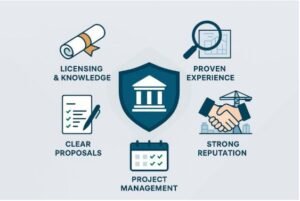
Proven Experience in Facade Restoration and Compliance
Strong Local Law 11 contractors have a track record of completed FISP projects and can show they know how different facade systems work. They understand DOB filing steps, inspection cycles, and the rules for materials like masonry, stone, terra cotta, and metal.
It helps if they have worked on buildings like yours. Older and historic buildings often need special skill in masonry restoration, terra cotta work, and waterproofing. Contractors with forensic engineering experience can also add value by finding the true cause of damage, so repairs last instead of acting as short-term patches.
Proper Licensing, Insurance, and Regulatory Knowledge
A reliable Local Law 11 contractor must be properly licensed with the NYC DOB. This is required. They also must carry liability insurance and workers’ compensation coverage. This protects the owner if there is an accident or job-site injury. Avoid any contractor without proper insurance, because the owner may end up responsible for costs.
Top contractors also follow regulatory and safety requirements closely. They follow OSHA standards and Local Law 196 training rules for job-site safety. They also understand NYC Construction Codes §28-302.1 and RCNY §103-04, which cover facade safety and inspection rules. It also makes sense to review a contractor’s DOB violation history; unresolved violations should be treated as a warning sign.
Strong Client References and Industry Reputation
A contractor’s past work and reputation often tell you what you need to know. Ask for references, especially from property managers and co-op/condo boards. These contacts can tell you how the contractor handled schedules, budgets, communication, and unexpected issues.
Also check their reputation in industry groups such as BOMA or NYC’s Construction Trades Council. Ask for before-and-after photos and project summaries so you can judge results. Contractors who share their history openly and can show past success are usually more dependable.
Clear, Detailed Proposals and Pricing Transparency
A strong proposal should be clear and specific. It should describe the scope of work, list materials and costs (for example, brick replacement or lintel repair), and give a realistic schedule that includes DOB filings and inspections. It should also list likely extra costs like scaffolding, sidewalk sheds, and permits.
Be careful with proposals that are unclear or very cheap. A low price can mean future cost increases caused by poor planning, missed site conditions, or low-quality materials and labor. These shortcuts often lead to more repairs later. Clear pricing and a detailed scope help prevent disputes and help keep costs controlled.
Efficient Project Management and Communication
Local Law 11 work requires steady coordination between the owner/management team, the QEWI, and the DOB. Good contractors manage this well. They usually assign a project manager to track the schedule, safety steps, and compliance needs, and to act as your main contact.
You should get regular updates on progress, delays, and new issues. Good communication also includes tenant notices, noise planning, and work-hour coordination to reduce disruption in occupied buildings. Weak project management often leads to delays, DOB penalties, and emergency work, so this is a key quality.
What to Expect During the Local Law 11 Contractor Process
A Local Law 11 project follows a set of phases that support compliance and public safety. If you know what happens in each phase, it is easier to work with your contractor and QEWI and keep the project moving.
The process is meant to be detailed, so small signs of damage are found before they become dangerous. It is also repeated every cycle, which means ongoing attention and planning are part of ownership.
Inspection Scheduling and Preparation
The process starts by scheduling the QEWI critical examination. Many buildings are trying to schedule inspections during the same cycle, and there are only so many QEWIs. Starting early in your sub-cycle helps you book the right professionals and avoid late filing penalties caused by scheduling delays.
Preparation also includes access planning. In many NYC areas, inspections and repairs need access to neighboring properties for scaffolding, netting, or other protection. Starting these access talks 12 to 18 months before your deadline is a good idea, because neighbor access can take weeks or months. The owner remains responsible for confirming FISP coverage and helping arrange needed access.
Facade Condition Classifications: Safe, SWARMP, Unsafe
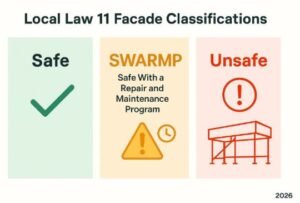
After inspection, the QEWI assigns one of three classifications, and each one leads to different next steps:
- Safe: No major issues were found. The facade does not create a public safety risk and is expected to stay safe for the next five years with normal upkeep.
- Safe with a Repair and Maintenance Program (SWARMP): The facade is safe right now, but the QEWI found issues that need repair or maintenance within the next five years (and not less than one year) so they do not become dangerous. If a SWARMP issue from a prior cycle is still not fixed at the next inspection, it will be reported as Unsafe.
- Unsafe: Conditions create an immediate danger. This requires immediate public protection (like a sidewalk shed or fence) and fast repairs, usually within 90 days of the report filing, or one year from the critical examination.
Repair Workflows and Timeline Expectations
The repair plan depends on the classification. If the building is Unsafe, the owner must take immediate steps to protect the public, such as netting, temporary sealing, securing loose items, or removing unstable materials. The QEWI notifies the DOB, and owners generally have 90 days from the filing date, or one year from the critical examination, to complete repairs. After fixing Unsafe issues, an amended report must be filed within two weeks. If the work cannot be finished on time, owners must file FISP Extension of Time forms (FISP 1 & FISP 2) every 90 days.
SWARMP items do not require the same urgent response, but delaying them can turn smaller repairs into expensive structural work. And if SWARMP issues are still open by the next cycle, they can be reclassified as Unsafe. Also, if a building is in major construction, it cannot be marked Safe until that construction is finished, which can affect scheduling.
Filing Reports with the Department of Buildings
All filings are submitted through DOB NOW: Safety. This is where QEWIs file reports and where owners can pay fees, upload documents, and track status updates.
The technical reports include detailed information such as color photos and condition maps, a statement on water-tightness, confirmation that prior-cycle repairs are done, and the cause and description of deterioration.
For SWARMP items, the QEWI must estimate when issues may become dangerous. For Unsafe items, the report must describe public protection needs (like sidewalk sheds or netting), and those protections usually require separate DOB permits.
Managing Ongoing Maintenance and Future Cycles
Local Law 11 is not finished when one cycle ends. The best contractors help owners plan regular upkeep that reduces future issues and helps avoid last-minute emergencies and big repair bills.
Good management includes keeping accurate records of inspections, repairs, and filings, and staying current on DOB rule updates as requirements change over time. It can also help to plan facade work alongside other projects like roof work, energy upgrades, or interior renovations, since combining work can reduce repeated setup costs and disruption.
Practical Questions for Selecting a Local Law 11 Contractor
Picking the right Local Law 11 contractor is one of the biggest decisions an owner or board will make. It affects safety, compliance, and property value. The best way to choose well is to ask direct questions and verify details instead of relying on sales talk.
Strong vetting at the start can prevent major costs and stress later. The questions below help you find a contractor who can handle both the repair work and the NYC process around it.
How Can You Verify a Contractor’s Qualifications?
Start by confirming the contractor is licensed with the NYC DOB. Confirm they have liability insurance and workers’ compensation coverage so you are protected if something goes wrong.
Also confirm they follow OSHA standards and Local Law 196 training requirements, because safety failures can lead to stop-work orders and penalties. Established NYC firms like Nova Construction Services are familiar with these requirements and can document compliance up front.
Check their DOB history too. Unresolved DOB violations are a serious warning sign. For the QEWI, confirm the inspector is on the NYC DOB Approved QEWI list, holds a current NYS PE or RA license, and has professional liability coverage. QEWIs with forensic engineering experience can also be helpful for spotting patterns and root causes.
What Should You Ask About Their Project Experience?
Ask about their past Local Law 11 projects and request examples on buildings like yours (age, structure, and facade materials). If you own a historic or pre-war building, ask about masonry restoration, terra cotta repairs, and waterproofing experience. They should clearly understand NYC codes, materials, and common facade problems.
Also ask how they handle DOB filing timelines and how they coordinate work between the owner, QEWI, and DOB. Their explanation should show a clear process. Ask about staffing and resources as well, since a contractor with limited crew size may rush work or miss deadlines.
Should You Request References and Past Project Examples?
Yes. Ask for references from property managers, co-op boards, or condo associations where they recently completed FISP work. Call those references and ask about reliability, communication, budget control, schedule performance, and overall quality.
Also request before-and-after photos and written summaries of past projects. This helps you judge workmanship and understand what the contractor can handle. A solid contractor should be comfortable sharing this and explaining how they handle unexpected conditions and change orders.
Risks of Choosing the Wrong Local Law 11 Contractor
A low bid or fast start can be tempting, but a poor contractor choice can cost far more than it saves. The risks go beyond schedule issues. They can include major fines, legal problems, long-term building damage, and public safety risks.
Missed deadlines, higher penalties, weak repairs, and unhappy tenants are common outcomes when the wrong team is hired. Knowing these risks helps owners and boards make safer decisions.
Missed Inspection or Report Deadlines
One of the fastest ways to get fined is missing filing deadlines. The DOB requires reports to be filed within the building’s sub-cycle window. Late filings can bring a $1,000 per month penalty, charged retroactively from the deadline. If no report is filed, owners can face $5,000 yearly charges.
Another common problem is leaving SWARMP items unfixed. If SWARMP conditions from a prior cycle are still open, they often default to Unsafe when the next cycle window closes. That can trigger Environmental Control Board (ECB) penalties, including a $5,000 base penalty for Unsafe conditions, up to $25,000 maximum, plus continuing $1,000 monthly penalties until the issues are corrected. A careless contractor can push a building into this expensive situation.
Financial and Legal Penalties for Non-Compliance
Penalties go beyond late fees. Unsafe conditions can bring large base fines and ongoing monthly penalties until an amended report confirms all repairs are complete. These costs can add up quickly and create serious budget surprises.
Legal risk can also come from poor contracts and poor insurance. If a contractor does not carry the right coverage, the owner may be responsible for injuries or damage. Vague scopes of work and unclear change order rules can lead to disputes and lawsuits. In NYC, work often affects nearby properties, and problems with access license agreements or RPAPL § 881 petitions can cause long delays and legal bills if handled poorly.
Operational Consequences and Safety Issues
Choosing the wrong contractor can also disrupt building operations. If the building is Unsafe and repairs are delayed, the DOB can require sidewalk sheds and other protective structures at the owner’s cost. These sheds can be expensive to keep, block storefronts, and reduce sidewalk space.
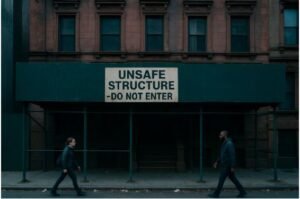
Ongoing facade issues can lead to more DOB scrutiny, stop-work orders for other projects, and trouble with financing or selling the property. Most importantly, poor repairs can put people at risk from falling debris. For co-ops and condos, facade work can also bring noise, dust, blocked light, and access issues, which can lead to tenant complaints or claims if not managed well. In worst cases, a contractor may abandon the project, fail inspections, or leave liens, turning compliance work into a long and costly problem.
Final Insights on Partnering with Top Local Law 11 Contractor Services
Local Law 11 is a major responsibility for NYC building owners, and it takes real time and planning. But it is more than a rule to get through. It is a chance to protect your property, keep the public safe, and support the long-term health of the city’s buildings. Changes in FISP over time, including efforts like the “Get Sheds Down” plan and Cycle 10 updates, show the city’s ongoing focus on improving safety.
Working with a strong Local Law 11 contractor is about more than meeting a deadline. It means knowing your facade is being maintained with care and accurate planning. The best contractors look ahead, find the cause of damage, and complete repairs that last. This approach helps prevent future emergencies, lowers the chance of fines, protects property value, and supports a safer street for everyone who lives, works, or walks near your building.