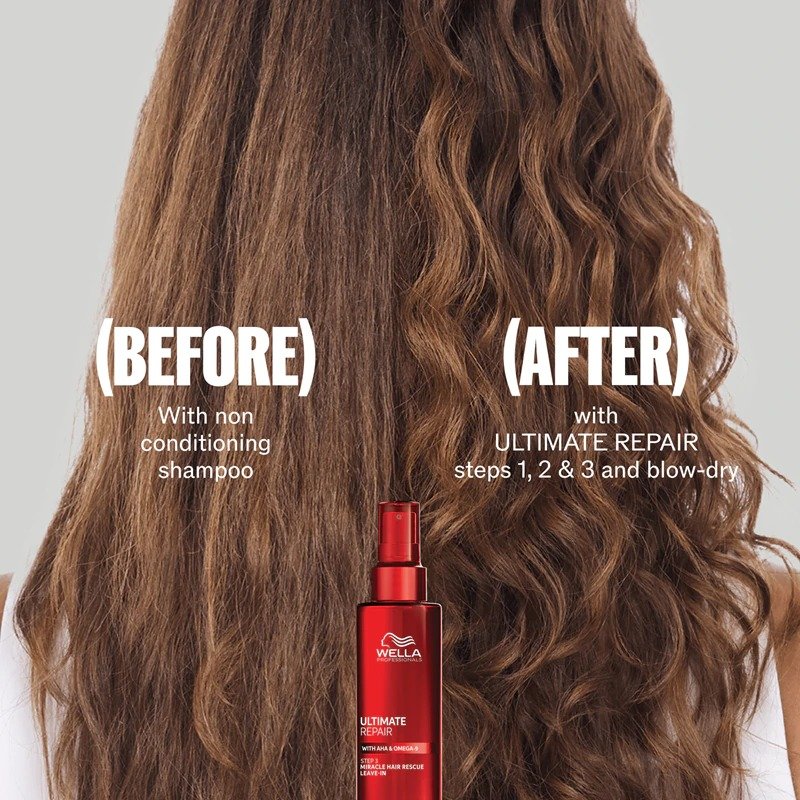

There is a particular kind of bad hair day that no amount of washing seems to fix. The hair looks dull under any light, feels coated rather than dirty, and goes limp about four hours after drying. People usually blame their shampoo and buy a different one, which occasionally helps and mostly does not, because the problem was never that the hair was unwashed.
Build-up is a real thing rather than a marketing invention. Silicones from conditioner, polymers from dry shampoo and hairspray, oils from styling creams and minerals from hard water all deposit on the hair shaft over a period of weeks. Ordinary shampoo is formulated to be gentle, which is what most people want most of the time, and gentle surfactants leave a proportion of that residue behind after every wash. Over a couple of months it adds up to a film you can feel.
What a detox shampoo does differently
A detox shampoo uses stronger surfactants, often alongside chelating agents that bind to calcium and magnesium from hard water and rinse them away. That is the meaningful difference. A standard sulphate-free formula will not shift limescale deposits, and across the hard water areas of the UK, which covers most of the south and east, mineral build-up is frequently the main culprit rather than styling product.
You can usually tell which one you are dealing with — product build-up makes hair feel slick and heavy, mineral build-up makes it feel rough and straw-like, and it dulls colour faster. That’s why people with dyed hair tend to notice it first.
How often to use detox shampoo (and the mistake to avoid)
Once a fortnight is enough for most people. Once a week is reasonable if you use a lot of styling product or swim regularly. Go beyond that and you will strip the scalp, which responds by producing more oil, and the whole exercise turns self-defeating.
Always follow with a proper conditioner or a mask. Clarifying formulas work by removing everything, and everything includes the oils you wanted to keep. Skipping that step is why people come away convinced the shampoo damaged their hair, when what actually happened is that nothing went back in afterwards.
If your roots are the real problem
Greasy roots with dry ends is a different issue and does not call for a clarifying wash every time. It usually wants a lighter daily formula and better rinsing at the sink. Comparing the best shampoo for greasy hair options is a more sensible starting point than reaching for something harsh twice a week, and Notino lists full ingredient breakdowns, so you can check for heavy conditioning agents that may be adding to the problem.
Who should be careful
Anyone with bleached, very dry or curly hair should treat a clarifying wash as an occasional reset rather than a routine. Colour-treated hair loses tone faster afterwards, so use one before a salon appointment rather than after. If your scalp is flaky or already irritated, a stripping formula will make things worse before it makes them better.
So it works, but only on the specific problem it was built for. If your hair is limp because it is fine, or greasy because your scalp is oily, a clarifying wash will disappoint you twice a month for as long as you keep buying it.