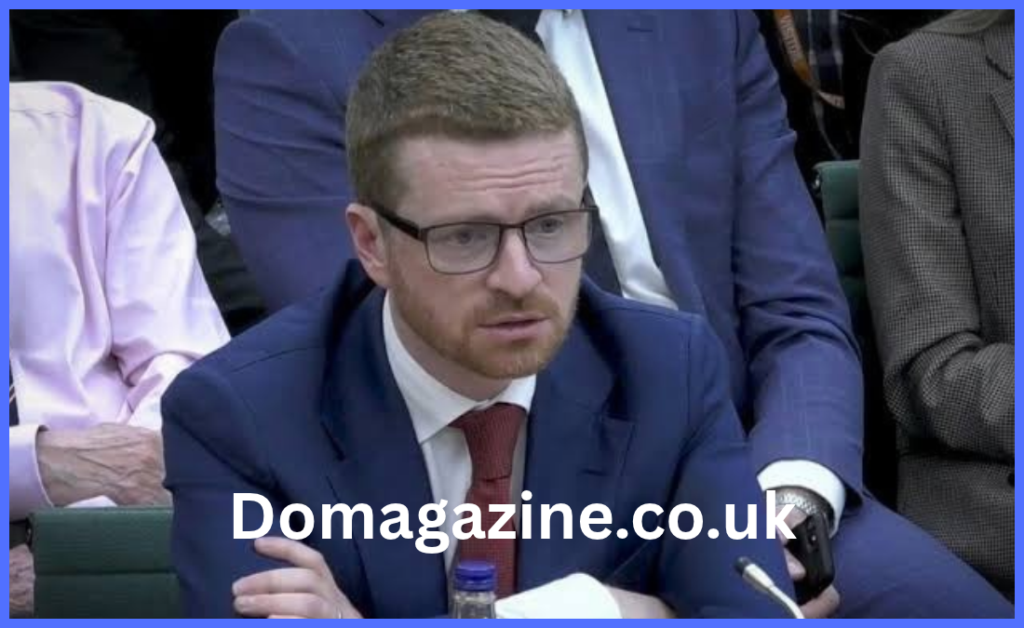

Morgan McSweeney became one of the most influential figures around Keir Starmer, moving from Labour campaign strategist to Downing Street chief of staff. His rise was built over decades of election work, political organising and close relationships inside the Labour movement.
Who Is Morgan McSweeney?
Morgan McSweeney is a Labour political strategist who became closely associated with Keir Starmer’s political operation. He was appointed Downing Street chief of staff in October 2024, replacing Sue Gray, after previously working as Starmer’s campaign director and head of political strategy.
The position made him the prime minister’s most senior political adviser. The Institute for Government describes the chief of staff as a role that can involve advising on government policy, party politics and communications, while also overseeing political staff and special advisers.
From County Cork to Labour Politics
McSweeney was born in Macroom, County Cork, Ireland. Public profiles of his career report that he joined the Labour Party in 1997 and initially worked in its attack and rebuttal operation during the New Labour era.
His career later took him into marginal-seat campaigning. He worked for cabinet minister Alan Milburn in an organising role connected with the 2005 general election before moving into local government politics.
One of the important stages in his career came at Lambeth Council. There he worked alongside Steve Reed, who later became a Labour cabinet minister. That relationship became an important connection in McSweeney’s subsequent political career.
The Labour Together Connection
After Labour’s defeat at the 2010 general election, McSweeney became head of the Labour Group Office at the Local Government Association. He later became involved with Labour Together, a political think tank established in 2017 with connections to figures including Steve Reed.
Labour Together became particularly significant after the party’s 2019 general-election defeat. McSweeney was involved in efforts to rethink Labour’s political direction and reduce the influence of Jeremy Corbyn’s political approach.
Descriptions of this period vary depending on the source and political perspective. What is documented is that McSweeney became an important strategist in the effort to reposition Labour before Starmer’s leadership and the 2024 election.
His Connection With Keir Starmer
McSweeney’s relationship with Starmer developed into one of the defining professional partnerships of his career. He served as Starmer’s chief of staff while Starmer was Labour leader between 2020 and 2021, later returning to a senior strategic role.
He subsequently became campaign director for Labour’s 2024 general-election campaign. Labour won a large parliamentary majority, and McSweeney was widely credited by political journalists with playing a major strategic role in the campaign. That attribution is an assessment by observers rather than an independently measurable claim that one individual caused the election result.
Becoming Downing Street Chief of Staff
When Sue Gray resigned as Starmer’s chief of staff in October 2024, McSweeney took over the position.
The appointment placed him at the centre of the government’s political operation. Unlike a cabinet minister, the chief of staff is not responsible for a government department, but the position can provide considerable access to the prime minister and influence over political strategy.
McSweeney’s tenure later became connected to controversy surrounding the government’s handling of Peter Mandelson’s appointment as ambassador to the United States.
What Happened in 2026?
McSweeney resigned as Downing Street chief of staff on 8 February 2026. The Institute for Government says his resignation followed several days of pressure surrounding the Mandelson appointment and revelations concerning Mandelson’s communications with Jeffrey Epstein.
There is an important distinction here. Resignation from the role is a documented fact. Claims about individual responsibility, motivations or the precise influence of particular advisers require separate attribution and should not be presented as established facts without evidence.
McSweeney later gave evidence to a parliamentary committee in April 2026. During that evidence, he discussed the Mandelson appointment and said he remembered believing that serving simultaneously as US ambassador and Oxford University’s chancellor would be incompatible. He also said he did not recall requesting official advice about whether the ambassadorial role could be part-time.
Morgan McSweeney’s Personal Life
Public reporting has also documented McSweeney’s marriage to Labour MP Imogen Walker. The couple met during his time working in Lambeth politics and later married. They have a son and have been reported as living between Scotland and London because of their respective political commitments.
Because personal details about political figures can easily become mixed with speculation, information beyond these publicly reported facts should be treated cautiously. There is no reason to treat unverified online claims as established biography.
The Main Mystery Behind His Rise
Morgan McSweeney‘s story is less about a conventional public political career and more about the influence of political strategy behind the scenes.
He did not become prominent through years of elected office. Instead, his career developed through campaigning, organisation, political networks and advisory positions. By the time Labour entered government in 2024, those skills had placed him close to the centre of Starmer’s operation.
His resignation in February 2026 marked a significant change in that role, but it did not erase the long career that had taken him from Labour’s campaigning operation to the heart of Downing Street.
Author Bio
By Daniel Harper
Daniel Harper is a political and human-interest journalist covering public figures, political careers and the stories behind Britain’s most influential institutions. His work focuses on separating documented facts from speculation and presenting complex political stories in clear, accessible language.