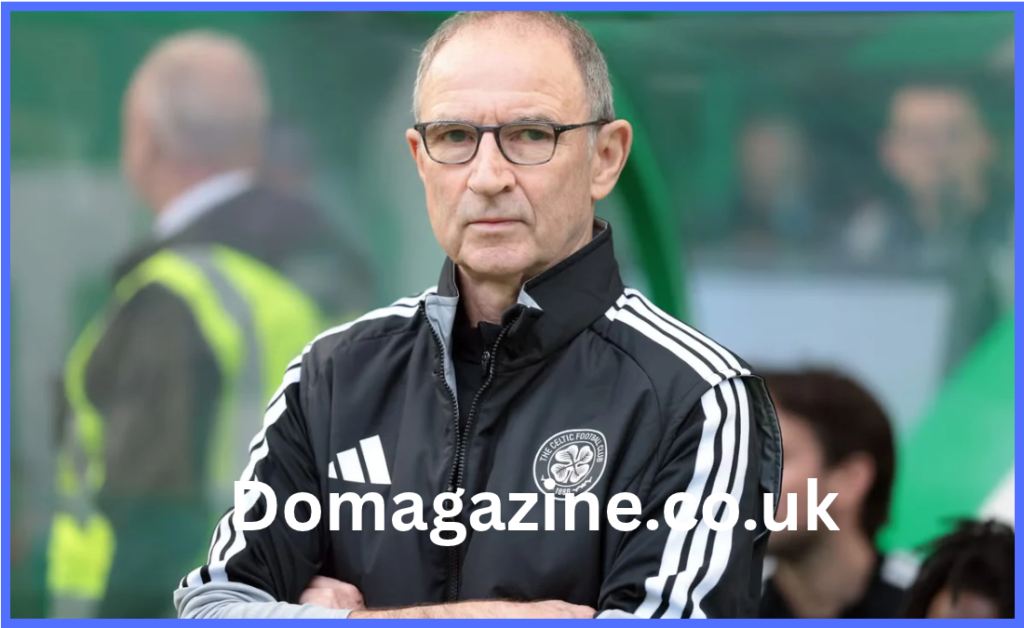

Martin O’Neill has won European football’s biggest club trophy as a player and built successful teams as a manager. If you want to understand his career, his connection with Celtic or what he is doing now, this guide brings the key facts together.
His story stretches from Northern Irish football to Nottingham Forest’s European triumphs, Leicester City’s cup victories and international management. His return to Celtic has added another chapter to a career already spanning several generations.
Who Is Martin O’Neill?
Martin O’Neill is a Northern Irish football manager and former midfielder. As a player, he is best known for his time at Nottingham Forest, where he was part of the team that won consecutive European Cups in 1979 and 1980.
He also earned 64 caps for Northern Ireland and captained the national team at the 1982 World Cup. His later managerial career included Leicester City, Celtic, Aston Villa, Sunderland and the Republic of Ireland.
One distinction matters for readers new to his story: O’Neill played international football for Northern Ireland but later managed the Republic of Ireland. Those are separate national teams.
What Is Martin O’Neill Doing Now?
As of October 2026, O’Neill is Celtic’s manager. The club announced his appointment on a one-year contract, with an option for another year, on 11 June 2026. Celtic’s October coverage continues to identify him as the first-team manager.
His renewed association with the club began with a return in October 2025. Celtic subsequently appointed him until the end of the season in January 2026, before confirming the June agreement.
According to Celtic’s appointment announcement, he helped deliver the league title and Scottish Cup in May 2026. Those achievements brought his total number of major honours as Celtic manager to nine.
For supporters who remember his original spell, the return connects two distinct periods in the club’s history. For younger fans, it offers a chance to see a manager whose reputation was established long before their first visit to Celtic Park.
His Playing Career at Nottingham Forest
Before the touchline celebrations and managerial interviews, O’Neill was an accomplished player.
He joined Nottingham Forest from Distillery in 1971. Under Brian Clough, he became part of a side that rose from the second tier to win the English league championship in 1978 and then successive European Cups. Leicester City’s historical profile records his involvement in that remarkable period.
There is an important detail behind those European honours: O’Neill played in Forest’s 1980 final victory against Hamburg. Being part of both successful campaigns does not mean he appeared in both finals.
His international experience was equally significant. Captaining Northern Ireland at the 1982 World Cup placed him at the centre of another memorable football story, something the Irish Football Association has recognised in its retrospective coverage.
From Wycombe to Leicester City
O’Neill’s managerial reputation developed through achievements at different levels of the game.
At Wycombe Wanderers, he helped the club reach the Football League in 1993. Promotion again in 1994 demonstrated that the first breakthrough could become sustained progress.
His Leicester City spell then brought success on a much larger stage.
The Leicester years that established his reputation
O’Neill led Leicester to League Cup victories in 1997 and 2000. The club also achieved four consecutive top-10 Premier League finishes and qualified twice for the UEFA Cup during this period.
Those league finishes are an important part of the story. Cup victories can define a season, but repeated top-half finishes show a team maintaining its competitiveness over several years.
Leicester also reached the 1999 League Cup final, meaning O’Neill’s side appeared in three finals of the competition across four seasons.
Why His First Celtic Spell Still Matters
O’Neill first managed Celtic between 2000 and 2005, winning seven trophies, including three Scottish league titles. His opening season brought a domestic treble: the league championship, Scottish Cup and League Cup.
Winning all three major domestic competitions immediately established the significance of his appointment. However, the achievement that carried Celtic’s story beyond Scotland was their run to the 2003 UEFA Cup final.
The European journey to Seville
Celtic faced José Mourinho’s Porto in Seville and lost 3–2 after extra time. Henrik Larsson scored twice for Celtic in a final that remained competitive deep into the additional period.
Although the trophy went to Porto, reaching the final remains central to O’Neill’s Celtic legacy. It showed his team competing through a demanding European campaign rather than relying solely on domestic success.
His original spell therefore left supporters with two lasting reference points: the immediate impact of the treble and the European ambition represented by Seville.
Aston Villa and the Republic of Ireland
At Aston Villa, O’Neill’s team recorded three consecutive sixth-place Premier League finishes and reached the 2010 League Cup final.
Reflecting on that period for The Coaches’ Voice, he explained that Champions League qualification had been an ambition. His account makes clear that consistent top-six finishes were valuable, even though the team wanted to go further.
International management brought a different challenge. Working with assistant Roy Keane, O’Neill guided the Republic of Ireland to Euro 2016 and into the last 16.
Robbie Brady’s late header secured the decisive group-stage victory over Italy. Ireland subsequently lost to tournament hosts France in the knockout round.
His Ireland tenure ended by mutual agreement in November 2018. That later disappointment belongs alongside the tournament success in any balanced assessment of his record.
How to Explore His Career Beyond the Headlines
For readers discovering O’Neill for the first time, three matches provide a useful starting point:
- Watch Forest’s 1980 European Cup final to see his playing career in its most successful club setting.
- Explore Leicester’s 2000 League Cup final to understand a defining achievement from his English managerial career.
- Watch Ireland against Italy at Euro 2016 to see the international breakthrough his team delivered.
Together, these examples show why his reputation extends beyond one club, competition or managerial spell.
Frequently Asked Questions
Is Martin O’Neill still managing Celtic?
Yes. As of October 2026, he is Celtic’s manager, following the contract announced in June 2026.
Did Martin O’Neill win the European Cup?
Yes. He was part of Nottingham Forest’s European Cup-winning teams in 1979 and 1980, and played in the 1980 final.
How many trophies did he win during his first Celtic spell?
He won seven major trophies between 2000 and 2005, including three league titles.
Which international team did Martin O’Neill manage?
He managed the Republic of Ireland, guiding them to the last 16 at Euro 2016. As a player, he represented Northern Ireland.
What did Martin O’Neill win at Leicester City?
He won the League Cup in 1997 and 2000, alongside establishing Leicester as a consistent top-half Premier League side.
Conclusion
Martin O’Neill’s career combines European success as a player with promotions, cup victories and international achievements as a manager. His Celtic return adds to that record while making his story relevant to current supporters.
Start with the matches that defined his career, then follow Celtic’s official updates for the latest chapter.