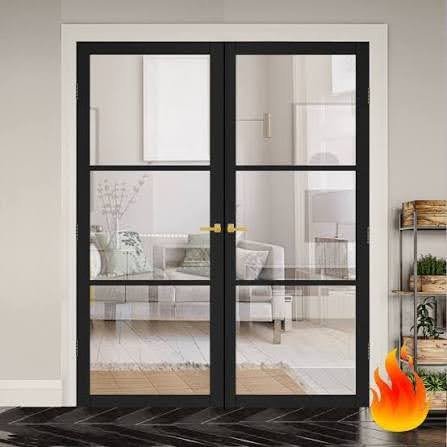

Fire doors are one of the most important safety features in a building. They are designed to slow the spread of fire and smoke, helping protect escape routes and giving people more time to leave safely.
However, even a well-made fire door can become ineffective if it is damaged, poorly installed or not maintained. Loose hinges, broken closers, damaged seals and unsuitable frames are just some of the problems that may affect its performance.
This makes fire door installation, door repair, door replacement and door maintenance essential considerations for landlords, freeholders, managing agents and business owners.
Some doors may only need minor repairs, while others require a complete replacement. Understanding the difference can help property owners make informed decisions about building safety and avoid unnecessary costs.
This guide explains how fire doors work, when they should be repaired or replaced, what maintenance involves and why fire door surveys and certificates are important.
What Is Fire Door Installation and Why Does It Matter?
Fire door installation involves fitting a specially designed fire-resisting door assembly or complete doorset into a building.
Unlike ordinary doors, fire doors are tested to resist fire for a specified period when installed with suitable frames, seals and hardware.
Their main purpose is to restrict fire and smoke movement between different areas of a building.
A typical fire door installation may include:
- Fire-rated door leaf and compatible frame.
- Suitable fire-rated hinges.
- Intumescent strips.
- Smoke seals where required.
- Self-closing devices.
- Appropriate locks, handles and latches.
- Fire-rated glazing where specified.
- Correct door gaps and alignment.
- Final installation checks.
Every component must be compatible with the door’s intended fire resistance.
For example, installing a fire-rated door leaf into an unsuitable frame may not provide the expected protection.
Liviosiv provides fire door installation services in London for residential and commercial properties. Its service range includes FD30, FD30S and FD60 fire door installations, with suitable hardware and installation documentation.
How Do Fire Doors Protect People During a Fire?
Fire doors form part of a building’s passive fire protection system.
They help separate areas of a building so that fire and smoke do not spread as quickly into corridors, staircases or other protected routes.
When a fire door is properly fitted and closed, it can help maintain the building’s fire compartmentation.
This protection is particularly important in blocks of flats, HMOs, offices, hotels and other buildings with shared escape routes.
However, a door that cannot close correctly may not perform as intended.
For example, a faulty closer may leave the door open. Similarly, an excessive gap around the frame could allow smoke to enter a protected corridor.
This is why fire door safety depends on correct installation, regular checking and suitable maintenance.
Door Repair: Common Problems That Can Be Fixed
Doors experience regular wear through everyday use. Over time, hinges may loosen, locks can become faulty and door closers may stop operating correctly.
Door repair involves identifying these problems and carrying out suitable corrective work.
Not every fault requires the entire door to be replaced.
Common door repairs include:
- Adjusting loose or damaged hinges.
- Repairing faulty latches.
- Replacing defective door closers.
- Correcting minor alignment problems.
- Replacing damaged smoke seals.
- Repairing suitable minor frame defects.
- Adjusting doors that do not close properly.
- Replacing compatible locks and handles.
For ordinary doors, these repairs can improve everyday operation and security.
Fire doors need additional care because unsuitable repairs may affect their fire resistance.
Replacement components must be compatible with the door’s specification and supporting technical evidence.
Property owners seeking door repairs in London can explore the repair and remedial services offered by Liviosiv.
Their services cover various door problems, helping property owners determine whether repairs are practical.
Door Replacement: How to Know When a Door Needs Replacing
Door replacement may be necessary when an existing door is badly damaged, unsuitable for its intended use or cannot be restored through appropriate repairs.
For fire doors, replacement decisions should be based on condition and performance rather than age alone.
A professional assessment can help determine whether the door leaf needs replacing or whether a complete doorset is required.
Severe Damage to the Door
Major cracks, significant warping, damaged cores or other structural problems may affect a fire door’s performance.
If the damage cannot be repaired using an appropriate method, replacement may be necessary.
Unsuitable Door Construction
An ordinary internal door may not provide the fire resistance required for a particular location.
If the existing door is unsuitable and cannot be upgraded appropriately, a fire-rated replacement may be needed.
Damaged Door Frames
The frame is an essential part of the fire door assembly.
A replacement door leaf should not automatically be fitted into an existing frame without confirming compatibility.
A damaged or unsuitable frame may require a complete doorset replacement.
Unapproved Alterations
Incorrect glazing, excessive trimming, unsuitable locks or other changes may affect a door’s fire resistance.
Where suitable remedial work cannot correct these alterations, replacement may be required.
Repeated Maintenance Problems
Some doors develop recurring faults because of structural damage or long-term deterioration.
In these situations, replacement may provide a more suitable long-term solution.
Liviosiv offers door replacement services in London for residential and commercial properties, including doors requiring fire-rated replacements.
Door Repair or Replacement: Which Is the Right Choice?
Choosing between repair and replacement depends on the type of fault and the door’s condition.
A minor defect may be corrected through maintenance, while serious damage may require a new door.
| Door condition | Possible action |
| Loose hinges | Adjust or replace compatible hinges |
| Faulty closer | Adjust or replace the closer |
| Damaged smoke seals | Fit suitable replacement seals |
| Minor alignment issue | Adjust where permitted |
| Faulty lock or latch | Repair or replace compatible hardware |
| Severe structural damage | Consider door replacement |
| Unsuitable existing frame | Assess complete doorset replacement |
| Significant unauthorised alterations | Specialist assessment and possible replacement |
For fire doors, repairs should follow suitable technical evidence and should not reduce the required fire performance.
Government guidance also makes clear that older flat entrance fire doors do not automatically need replacing simply because they lack modern certification.
The decision should reflect the condition of the door and whether it provides adequate protection.
Why Door Maintenance Is Important for Fire Safety
Door maintenance is an ongoing process that helps keep doors operating correctly.
In busy buildings, doors may be opened and closed many times each day. This repeated use places pressure on hinges, closers, locks and other components.
Without regular checks, minor defects can develop into more serious problems.
For fire doors, maintenance is particularly important because the door must remain capable of providing its intended protection.
What Does Fire Door Maintenance Include?
Fire door maintenance may involve:
- Checking door alignment.
- Testing self-closing devices.
- Inspecting hinges and fixings.
- Reviewing smoke seals and intumescent strips.
- Checking gaps and thresholds.
- Inspecting locks and latches.
- Checking the door leaf and frame for damage.
- Completing suitable adjustments.
- Recording defects and completed work.
For example, a communal fire door may stop closing correctly because its hinges have become loose.
A suitable adjustment may resolve the problem without replacing the door.
However, where significant defects are found, a detailed inspection or replacement may be recommended.
Liviosiv offers fire door maintenance services in London for managed residential buildings, HMOs, workplaces and other premises.
Regular maintenance helps property managers identify problems before they affect fire door performance.
What Is a Fire Door Survey?
A fire door survey is a detailed assessment of the condition and suitability of existing fire doors.
It helps identify defects and provides recommendations for repair, maintenance or replacement.
Surveys are particularly useful in buildings containing several fire doors.
For example, a block of flats may have individual entrance doors, communal corridor doors and doors protecting service cupboards.
A survey can help establish which doors need attention.
What Does a Fire Door Survey Check?
A professional survey may examine:
- Door leaf construction and condition.
- Frame suitability.
- Door gaps and alignment.
- Hinges and fixings.
- Intumescent strips.
- Smoke seals.
- Self-closing devices.
- Locks and latches.
- Fire-rated glazing.
- Visible signs of damage or alteration.
The assessor records the findings and identifies any concerns.
Some doors may only require maintenance, while others may need further investigation or complete replacement.
Property owners can explore Liviosiv’s fire door survey services in London when they need an assessment of existing doors.
A written survey can also help managing agents plan remedial work and prioritise costs.
Fire Door Certificate: What Property Owners Should Know
A Fire Door Certificate is a term commonly used when property owners need documentation relating to fire doors.
However, several different documents may be involved, and they do not all provide the same evidence.
Fire Door Product Certification
Product certification or fire test evidence helps establish the performance of a fire door or doorset under specified conditions.
This information is important when selecting new fire-rated products.
Fire Door Installation Documentation
After installation, the contractor may provide records of the completed work.
These may include product specifications, installation information, photographs and relevant declarations.
Fire Door Inspection Report
An inspection report records the condition of an existing door.
It may identify defects, explain safety concerns and recommend repairs or replacement.
An inspection report does not automatically prove that an existing door has achieved a particular fire resistance rating.
There is also no universal government-issued fire door certificate required for every door in the UK.
The important consideration is whether the available documentation provides suitable evidence for the door and work completed.
Liviosiv offers fire door certificate services in London for property owners seeking appropriate fire door inspection and documentation services.
Understanding FD30, FD30S and FD60 Fire Doors
Different buildings require different fire door specifications.
The correct type depends on the building’s fire strategy, intended location and applicable fire safety requirements.
FD30 Fire Doors
FD30 doors are designed to provide at least 30 minutes of fire resistance under the relevant tested conditions.
They are commonly specified for certain residential and commercial applications.
FD30S Fire Doors
FD30S doors combine the relevant 30-minute fire-resistance specification with smoke-control performance.
These doors may be suitable for certain flat entrances and protected escape routes.
FD60 Fire Doors
FD60 doors are designed to provide at least 60 minutes of fire resistance under the relevant tested conditions.
They may be specified in areas requiring a higher level of protection.
The door specification should be confirmed through the building’s fire strategy or a competent fire safety assessment.
Fire Door Installation for Flats, HMOs and Residential Buildings
Fire doors are particularly important in buildings where several households share escape routes.
Blocks of flats may contain fire-resisting entrance doors, communal corridor doors and doors protecting staircases.
Houses in multiple occupation may also require suitable fire doors to separate certain rooms from shared escape routes.
Common residential fire door problems include:
- Flat entrance doors that do not close properly.
- Damaged or missing seals.
- Faulty door closers.
- Loose hinges.
- Excessive gaps.
- Damaged frames.
- Unsuitable replacement doors.
The appropriate action depends on the type of building, the door’s condition and the level of fire resistance required.
A professional inspection can help determine whether repairs, maintenance or replacement are necessary.
Fire Door Services for Commercial Properties
Commercial buildings often contain fire doors protecting offices, corridors, staircases, service areas and plant rooms.
These doors may experience heavy daily use, particularly in schools, hotels, offices, warehouses and hospitality premises.
Regular checks can help identify damage before it affects the door’s intended performance.
Fire door installations in commercial buildings may include:
- Internal timber fire doors.
- Fire-rated glazed doors.
- Steel fire doors.
- Fire-resisting doorsets.
- Doors protecting service cupboards.
- Doors forming part of protected escape routes.
Different locations may require different fire resistance and hardware specifications.
A door used as a final exit is not automatically a fire-resisting door, and some locations may require a door that performs both functions.
The correct specification should be determined by the building’s requirements.
UK Fire Door Regulations and Legal Responsibilities
Fire door requirements depend on the building’s use, construction and applicable legislation.
In England, the Regulatory Reform (Fire Safety) Order 2005 requires Responsible Persons to maintain suitable fire precautions for premises within its scope.
The Fire Safety Act 2021 clarified that relevant flat entrance doors are included within the scope of the Fire Safety Order for buildings containing two or more sets of domestic premises.
The Fire Safety (England) Regulations 2022 introduced additional routine checking duties for certain residential buildings.
For buildings with a top storey more than 11 metres above ground level, Responsible Persons must:
- Check communal fire doors at least every three months.
- Use best endeavours to check flat entrance fire doors at least every 12 months.
- Include the operation of self-closing devices in relevant checks.
- Keep appropriate records of annual flat entrance door checking efforts.
The regulations also require relevant fire door safety information to be given to residents of multi-occupied residential buildings.
These routine checks help identify defects that could affect the protective function of doors.
They are not a replacement for a suitable fire risk assessment or more detailed specialist inspection when needed.
The official GOV.UK fire door guidance provides further information about these responsibilities.
How Much Does Fire Door Installation, Repair and Replacement Cost?
Fire door costs vary according to the type of work needed.
Installing a complete doorset usually involves more materials and labour than adjusting an existing door.
Factors that may affect the price include:
- Required fire resistance rating.
- Door size and design.
- Door leaf and frame condition.
- Timber, steel or glazed construction.
- Fire-rated hinges.
- Self-closing devices.
- Smoke seals and intumescent strips.
- Locks and security hardware.
- Number of doors.
- Site access and installation complexity.
- Removal of existing components.
- Documentation requirements.
A simple repair may be more economical than replacement when the existing door remains suitable.
However, replacing a door may be necessary where significant structural damage or incompatible components prevent an appropriate repair.
Customers should request a quotation that clearly explains the proposed work and what is included.
How to Choose a Competent Fire Door Service Provider
Fire doors are specialist safety products, so choosing a competent contractor is important.
The contractor should understand the required fire resistance, suitable materials and correct installation procedures.
Before booking, property owners should consider:
- Relevant fire door installation experience.
- Suitable training and qualifications.
- Knowledge of fire door specifications.
- Experience with compatible hardware.
- Appropriate insurance.
- Clear inspection and repair recommendations.
- Installation documentation.
- Relevant third-party certification where required.
Liviosiv provides fire door installation, repair, replacement, maintenance and survey services for residential and commercial properties across London.
Its published service information describes work involving FD30, FD30S and FD60 doors, along with associated frames, hinges, closers and seals.
Customers should confirm the qualifications of the attending installer and verify any claimed third-party certification before arranging specialist work.
Fire Door Installation and Related Services Across London
London contains a wide variety of buildings, from Victorian conversions and period houses to modern apartment blocks and large commercial premises.
Each property may have different fire door requirements.
Older buildings may contain unusual openings, damaged frames or doors that have been altered over time.
Modern residential developments may require suitable flat entrance fire doors with smoke-control features.
Commercial buildings may need specialist doorsets, glazed fire doors or steel fire doors.
Liviosiv provides fire door installation and related services across Central, East, West, North and South London.
The company supports landlords, freeholders, managing agents and business owners seeking professional door services.
Property owners can learn more about the company’s wider services through the Liviosiv website.
Frequently Asked Questions About Fire Door Installation and Maintenance
What is a fire door installation?
Fire door installation involves fitting a suitable fire-resisting door assembly or doorset with compatible frames, seals, hinges and other components.
Can a damaged fire door be repaired?
Yes. Some fire doors can be repaired through suitable adjustments or replacement of compatible components. Repairs must not compromise the required fire resistance.
When should a door be replaced?
Replacement may be required when the door has severe structural damage, is unsuitable for its location or cannot be restored through an appropriate repair.
What does door maintenance involve?
Door maintenance may include checking hinges, closers, seals, locks, frames, gaps and alignment, alongside suitable repairs and adjustments.
What is a fire door survey?
A fire door survey examines existing doors to identify defects and determine whether maintenance, repairs, further investigation or replacement are needed.
What is a fire door certificate?
A fire door certificate may refer to product certification, installation records or an inspection-related document. These have different purposes and should not be treated as interchangeable.
Do all old fire doors need replacing?
No. Existing fire doors do not automatically require replacement simply because they lack modern certification. Their condition and suitability should be assessed.
Can a new fire door be installed in an existing frame?
Sometimes, provided the frame is suitable and compatible with the required door specification. Otherwise, a complete doorset may be necessary.
How often should fire doors be inspected?
Inspection requirements depend on the building. Relevant residential buildings over 11 metres have specific quarterly communal door and annual flat entrance door checking duties.
What happens if a fire door fails inspection?
The report should identify the defects and recommend appropriate action. This may involve repairs, maintenance, further investigation or replacement.
Final Thoughts
Fire door installation, door repair, door replacement and door maintenance all play an important role in maintaining building safety.
New fire doors must be correctly specified and installed. Existing doors should be checked regularly and maintained so they continue to provide the intended protection.
A professional survey can help determine whether a damaged door can be repaired or requires replacement.
Suitable certification and inspection documentation can also support property management and fire safety records.
For landlords, freeholders, managing agents and business owners across London, Liviosiv offers fire door installation, repairs, maintenance, surveys and replacement services.
Property owners can contact Liviosiv to discuss fire door installation, door repair, replacement, maintenance or surveys and request a quotation based on their building’s needs.