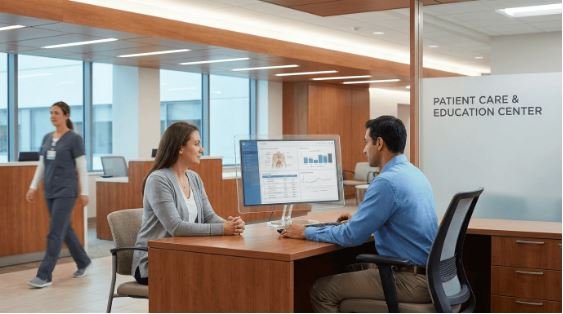

The healthcare industry operates on a foundation of absolute precision and unwavering trust. When patients or medical professionals engage with digital content, they expect clarity and professionalism. However, many healthcare marketers face a significant challenge when adopting modern tools. Traditional AI video generation often struggles with “the uncanny valley” or garbled text on medical labels. These visual errors do more than just look unprofessional. They actively erode the trust that a brand has spent years building.
In the world of medical communication, a misspelled drug name or a blurry anatomical diagram can be a deal-breaker. Creators often find themselves stuck between expensive traditional production and low-quality automated tools. This gap in quality is where modern advancements in visual models like GPT Image 2 are changing the narrative. By providing pixel-perfect text and 4K photorealistic output, these tools are setting a new standard for clinical storytelling.
Marketing teams now have the power to create complex, high-stakes visual content without the traditional overhead. Using platforms like higgsfield, creators can access the latest models to ensure every frame of a video remains medically accurate. This article explores how advanced AI models bridge the gap between creative vision and clinical reliability.
The Evolution of Health Communication
The way we share medical information is shifting toward a more visual and digital-first approach. According to research on health communication, visual aids can significantly improve patient understanding and treatment adherence. When complex medical data is translated into clear, cinematic video, it becomes more accessible to the average person.
However, the barrier to entry for high-quality video has historically been high. Traditional studios require massive budgets and weeks of post-production. AI video generation promised to solve this, but early models lacked the control needed for healthcare. They often produced flickering images or inconsistent characters that distracted from the life-saving information being presented.
Today, the landscape is different. We are seeing a convergence of text-to-visual models and high-fidelity video engines. This allows for a level of detail that was previously impossible. With the integration of GPT Image 2 on the higgsfield platform, marketers can now generate commercial-grade imagery that serves as the perfect foundation for video storytelling.
How Seedance 2.0 Redefines Medical Visuals
At the heart of this revolution is Seedance 2.0, a state-of-the-art model developed by ByteDance. This model is not just another video generator. It is a multimodal powerhouse that accepts up to 12 different assets as inputs. This includes text, images, existing videos, and even audio files.
For healthcare marketers, this flexibility is a game-changer. You can input a high-resolution 4K image generated by GPT Image 2 and use it as a reference for a complete cinematic sequence. This ensures that the medical device or medication being featured looks exactly the same in every shot.
Key Capabilities of Seedance 2.0
- Multimodal Input: Use a combination of doctor photos, brand logos, and audio scripts to guide the generation.
- Character Consistency: Maintain the same patient or practitioner appearance across multiple scenes to build a narrative.
- Native Audio Sync: Ensure that the medical instructions or narrations match the visual movements perfectly.
- Frame-Level Precision: Control the movement of medical equipment or biological processes with surgical accuracy.
- Cinematic Multi-Shot: Create complex sequences that look like they were filmed by a professional crew.
These features are available to all users on higgsfield, regardless of their subscription plan. This democratization of high-end technology allows smaller clinics and pharmaceutical startups to compete with global giants in terms of visual quality.
Strategies for Building Trust Through Visual Clarity
Building trust in healthcare marketing requires more than just a high resolution. It requires a strategic approach to how information is presented. Here are three actionable strategies to use AI video generation effectively.
1. Eliminate Text Ambiguity
One of the biggest complaints about AI-generated visuals is the “gibberish” text. In a medical context, this is unacceptable. You should use a model that specializes in typography and character clarity. Using GPT Image 2 allows you to generate labels, posters, and product packaging that are 100% legible.
- Generate the primary product shot first using high-precision text models.
- Use that image as a “seed” for your video generator on higgsfield.
- Ensure that dosage instructions or ingredient lists are clear and static.
- Avoid overlapping text that might confuse a viewer during a fast-moving scene.
2. Prioritize Character Consistency for Patient Relatability
Patients need to see themselves reflected in healthcare marketing. If a character’s face changes slightly between shots, it creates a sense of unease. This “glitching” effect destroys the emotional connection.
- Define a clear character profile using specific visual prompts.
- Use Seedance 2.0’s consistency features to keep the character’s features stable.
- Show the patient journey from diagnosis to recovery within a single, cohesive video.
- Focus on micro-expressions to convey empathy and relief.
3. Create Multi-Shot Educational Tutorials
Healthcare education often involves multi-step processes. Whether it is a guide on how to use an inhaler or a breakdown of a surgical procedure, the flow must be logical.
- Start with a wide shot to establish the environment (e.g., a modern clinic).
- Move to a medium shot to introduce the practitioner and the device.
- Use close-up shots to show the exact hand movements required.
- End with a summary shot that reinforces the key takeaway.
By using the multi-shot capabilities on higgsfield, you can generate these different angles while keeping the lighting and environment consistent. This creates a professional look that mirrors high-budget educational films.
Solving the Professionalism Gap with Higgsfield
The transition from a creative concept to a finished healthcare video involves many technical hurdles. Most creators struggle with the fragmented nature of the workflow. They might use one tool for images, another for text, and a third for video. This often results in a “Frankenstein” project where nothing quite matches.
Higgsfield solves this by providing a unified platform. Users can access the power of GPT Image 2 to create the perfect commercial-grade base assets. From there, they can move directly into video generation using the Seedance 2.0 model. This streamlined process ensures that the 4K quality of the initial image is maintained throughout the entire video production.
The platform is designed for professionals who cannot afford to have their brand associated with low-quality AI artifacts. By offering frame-level precision and the ability to sync native audio, higgsfield allows marketers to produce content that is ready for social media, television, or professional medical conferences.
Why Visual Precision Matters for Compliance
In the healthcare sector, marketing is heavily regulated. Visuals must not be misleading or confusing. High-quality AI tools help meet these compliance standards by:
- Providing photorealistic 4K output that accurately represents physical products.
- Allowing for “Commercial Grade Imagery” that meets the standards of legal review teams.
- Offering multilingual typography features to ensure global medical campaigns are accurate in every language.
- Reducing the risk of visual hallucinations that could misrepresent medical data.
Conclusion: The Future of Trustworthy AI in Healthcare
The era of grainy, flickering AI video is coming to an end. As models like GPT Image 2 continue to improve, the focus is shifting toward specialized applications in fields like healthcare. Trust is the most valuable currency in medicine, and visual clarity is the best way to earn it.
By leveraging the advanced capabilities of higgsfield and the Seedance 2.0 model, healthcare marketers can finally tell stories that are as reliable as they are beautiful. Whether you are generating a product shot for a new pharmaceutical or a patient education video, the tools for professional-grade output are now within reach.
Harnessing these technologies allows for a more informed patient base and a more transparent medical industry. Start building that trust today by choosing tools that prioritize precision, consistency, and clarity. The future of healthcare marketing is not just about being seen – it is about being understood.