
Why Lighting Should Be Planned Early
Lighting is often treated as a finishing detail during a home renovation. Paint colours, flooring and furniture may receive attention first, while lighting is left until an electrician asks where each fitting should go. That approach can lead to poorly placed switches, dark work areas, too many fittings in one room and expensive changes once walls and ceilings have been completed.
A useful lighting plan starts alongside the room layout. Think about how each space will be used, where furniture will sit and which activities need clear task lighting. A kitchen needs strong light over worktops, while a living room usually benefits from a mix of general and softer background lighting. Hallways, stairs and entrances need practical coverage that helps people move safely through the property.
Planning early also gives the electrician time to consider cable routes, switching arrangements and suitable circuits. This is particularly important when adding recessed downlights, wall lights, exterior lighting or smart controls. Decisions made before plastering are normally easier and less costly to carry out.
Choosing Fittings for Each Part of the Home
A good starting point is to review the full range available through Light Hub Direct and then narrow the options according to the room, mounting position and level of protection required. The same fitting will not be suitable for every location, even when its appearance seems right.
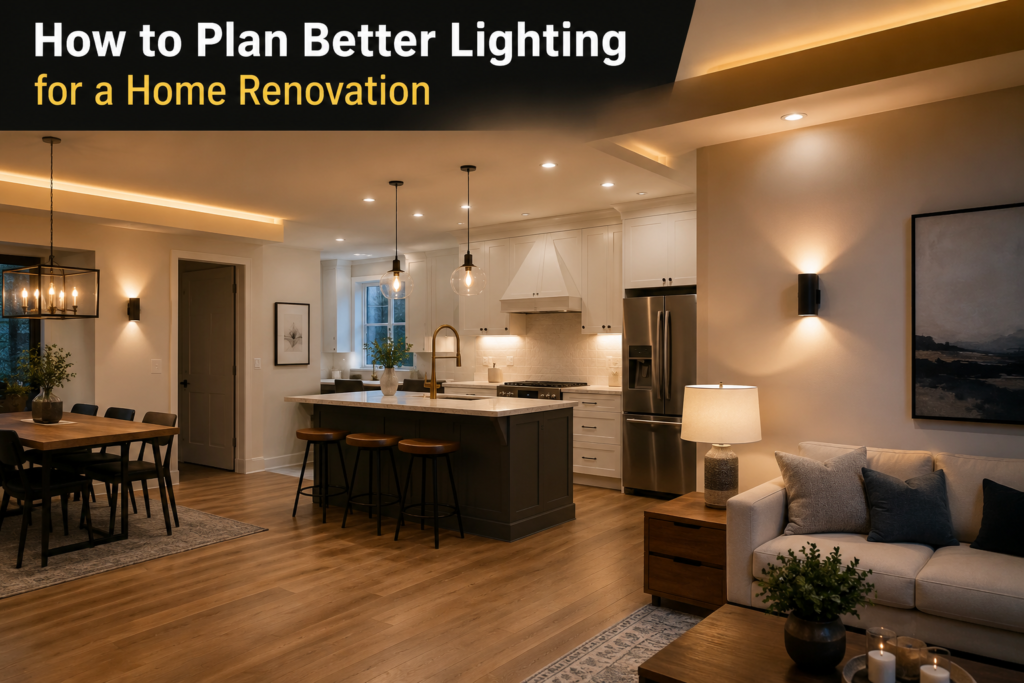
Kitchens often need several layers of light. Ceiling downlights can provide general coverage, pendant lights can define an island or dining area, and cabinet lighting can make food preparation easier. In bathrooms, fittings must be selected with the correct IP rating for their position. A qualified electrician can confirm which bathroom zone applies and which products are suitable.
Bedrooms rarely need the same brightness as kitchens or utility rooms. A central ceiling fitting may be supported by bedside lights, wall lights or discreet downlights. Living rooms can use a similar combination, with separate switching to give more control in the evening. Garages, lofts and workshops usually need brighter, more practical fittings such as LED battens, especially where detailed tasks or storage areas need to be clearly visible.
Think in Layers Rather Than Relying on One Light
Most rooms work better when lighting is divided into three broad types. General lighting provides the main level of brightness. Task lighting focuses on work areas such as kitchen counters, desks, mirrors or reading chairs. Accent lighting draws attention to shelves, artwork, alcoves or architectural details.
Using layers prevents the room from depending on a single bright ceiling light. It also allows the household to change the lighting according to the time of day. A kitchen may need every fitting on while meals are being prepared, but only pendants or cabinet lights later in the evening. In a living room, wall lights and lamps can provide enough light for relaxing without using the main fitting.
Separate circuits or switching groups make this easier. Dimmer compatibility should be checked before products are ordered, as not every LED fitting or driver is designed for dimming. Mixing incompatible components can lead to flicker, a limited dimming range or unwanted noise.
Check Colour Temperature and Light Output
LED lighting is available in different colour temperatures. Warm white light is commonly used in bedrooms, lounges and dining spaces because it has a softer appearance. Neutral white is often chosen for kitchens, bathrooms, offices and utility rooms. Cooler daylight tones can suit garages, workshops and areas where clear visibility is the main priority.
Consistency matters. Using noticeably different colour temperatures in one open-plan area can make the space feel disjointed. Where the kitchen and living area share the same room, consider fittings with matching or adjustable colour temperatures. Some products include a CCT switch, allowing the installer to choose the setting during installation.
Brightness should be judged by lumens rather than wattage alone. LED products can produce different amounts of light while using similar power. Room size, ceiling height, wall colour and the beam angle of each fitting all affect the final result. Dark surfaces absorb more light, while pale walls and ceilings reflect it more effectively.
Do Not Overlook Outdoor and Access Lighting
Renovation plans often stop at the back door, but exterior lighting can improve access and make entrances, paths and driveways easier to use after dark. Wall lights, porch lights, step lights and bollards should be chosen for the conditions they will face. Outdoor fittings need an appropriate IP rating and should be installed according to the manufacturer’s instructions.
Motion sensors can be useful at side passages, garages and entrances, particularly where lights are only needed for short periods. Dusk-to-dawn photocell fittings can provide automatic lighting throughout the night. The right option depends on the location, nearby properties and how the area is used.
Avoid placing very bright fittings where they shine into bedroom windows or neighbouring homes. A well-positioned lower-output fitting can often provide better useful light than a powerful floodlight aimed across the whole garden.
Order Products With Installation in Mind
Before buying, check the cut-out size, fitting dimensions, driver requirements, mounting depth, IP rating, colour temperature and warranty. For replacement work, measure the existing openings rather than assuming a new downlight will fit. For larger projects, order a small number first when possible, so the finish and light output can be checked before the remaining fittings are purchased.
It is also worth considering delivery timing. Lighting products should arrive before the electrician is booked, but they should not be stored on a damp building site or left where packaging may be damaged. Light Hub Direct supplies domestic and commercial LED lighting, with free next-day UK shipping on qualifying orders over £50 and a 30-day returns policy, subject to its current terms.
A successful lighting scheme is not simply a collection of attractive fittings. It is a practical plan based on how each room will be used. Giving lighting the same attention as the rest of the renovation can reduce last-minute changes and produce a home that works better every day.