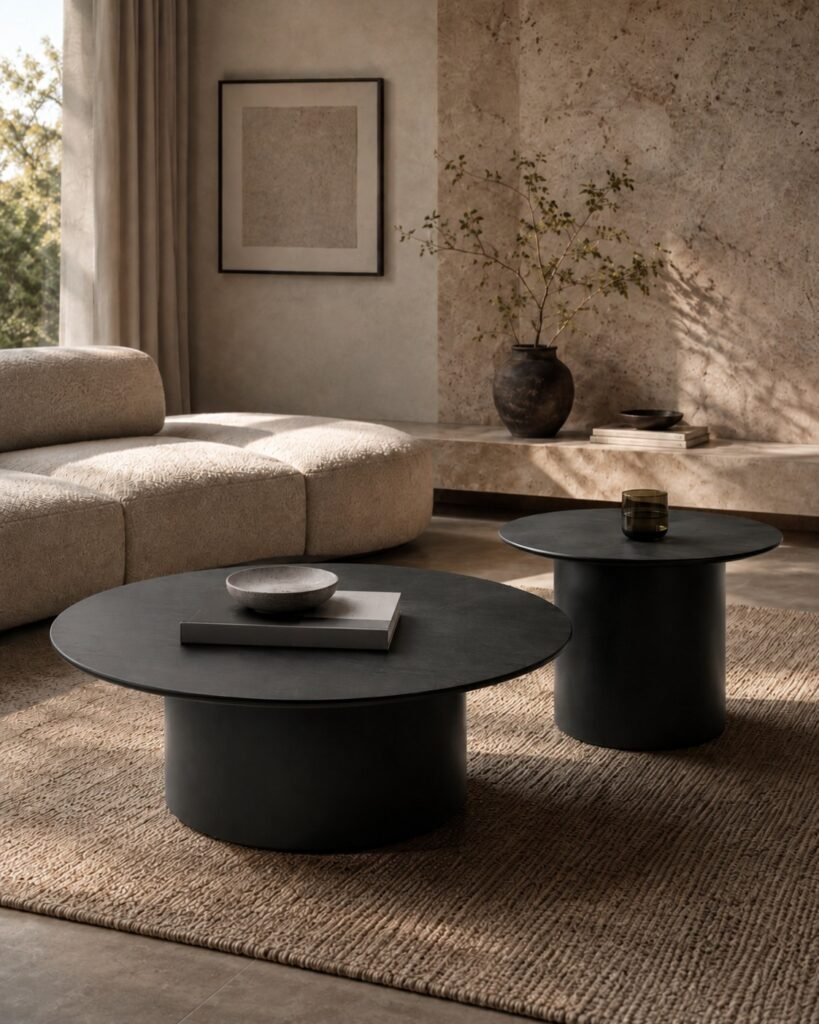

A living room furnished in neutral tones can feel calm and inviting, yet without enough contrast, individual pieces of furniture may lose their definition. A black coffee table offers a way to introduce a darker element without changing the room’s overall colour palette.
The effect is particularly noticeable in interiors featuring pale upholstery, natural wood, stone and textured fabrics. Against these lighter surfaces, black creates a clear focal point, helping to establish the proportions of the seating area.
The choice of table matters, however. A broad timber design will have a very different presence from a delicate metal frame or a pair of round nesting tables.
Creating Contrast Without Overwhelming the Space
Black furniture works best when its visual weight is considered alongside the surrounding materials.
In a living room with a cream sofa, light oak flooring and warm white walls, a dark coffee table can provide enough contrast to give the seating arrangement greater definition. The colour need not be repeated extensively. A black picture frame, a dark detail in a rug or the metalwork of a floor lamp may be sufficient to establish a connection.
The finish also makes a difference. A matt black surface absorbs more light and tends to appear quieter, while polished stone, glass or metallic details create stronger reflections.
For interiors already featuring several dark elements, texture becomes especially important. Timber grain, irregular stone veining and brushed metal finishes prevent the arrangement from appearing visually flat.
Choosing the Right Shape for Your Seating Arrangement
The shape of a coffee table influences how comfortably people move around the living room.
Round designs are particularly useful in seating arrangements where sofas and armchairs face towards a shared central point. Their curved edges make it easier to move between seats, especially when space is limited.
Rectangular tables generally suit longer sofas. They provide a practical surface across much of the seating area and can help balance the proportions of a substantial three-seater or corner sofa.
For larger living rooms, a more sculptural design can introduce architectural interest. A substantial base, an unusual silhouette or a broad tabletop may become a defining feature of the arrangement.
Those exploring different shapes and materials can find a useful range of black coffee tables at K&B London, including round, rectangular and sculptural designs in wood, metal, glass and mixed materials.
How Materials Change the Appearance of Black Furniture
Two black coffee tables can create entirely different impressions depending on their construction.
Dark-stained timber retains the natural texture of wood, often revealing subtle variations in grain and surface finish. It pairs comfortably with linen, wool and other tactile materials, making it well suited to interiors with a warmer, more relaxed character.
Metal offers greater freedom in the shape of the base. Slender frames can maintain a sense of openness, while solid cylindrical or geometric constructions create a stronger visual presence.
Marble introduces natural pattern and tonal variation. Its veining becomes part of the design, particularly when the stone is positioned against plain upholstery or a neutral rug.
Glass can create a lighter appearance, even when combined with dark metalwork. Smoked or tinted surfaces allow other elements of the room to remain visible, making them useful where a solid black tabletop might feel too dominant.
Rather than selecting a table purely for its colour, it is worth considering how the material relates to the floor, sofa, lighting and other furniture.
Getting the Proportions Right
One of the most common mistakes when choosing a coffee table is concentrating on its appearance without considering its dimensions.
A table that is too small can appear disconnected from a large sofa, while an oversized model may restrict movement and make the seating arrangement feel crowded.
As a starting point, the coffee table should be comfortably accessible from the main seating position. Its height should generally sit close to the level of the sofa seat, although the most suitable arrangement will depend on how the furniture is used.
It is equally important to leave sufficient space around the table. A beautiful design quickly becomes inconvenient if people have to manoeuvre awkwardly between it and the sofa.
In compact rooms, an open metal base or a pair of nesting tables may offer greater flexibility. Larger interiors can accommodate more substantial pieces, provided their proportions remain balanced with the surrounding furniture.
Styling a Black Coffee Table with Restraint
A dark tabletop offers a particularly effective backdrop for ceramics, books and natural materials.
A pale stone bowl can introduce contrast, while a sculptural ceramic vessel brings texture without requiring a strong colour accent. Books with neutral covers can help create a layered arrangement, particularly on a wide rectangular table.
The amount of decoration should reflect the table’s design. A sculptural base or strongly veined marble top may need very little embellishment. Simpler tables can accommodate a more varied arrangement of objects.
Practicality matters too. Leaving part of the surface clear ensures that the table remains useful for everyday activities rather than becoming a display that is difficult to maintain.
A Considered Choice for Modern Interiors
Black coffee tables can suit a wide range of interiors, from restrained contemporary living rooms to spaces featuring vintage furniture, natural materials and more decorative details.
Their success depends less on following a particular style and more on the relationship between colour, scale and construction.
When these elements are carefully considered, a black coffee table can bring clarity to a seating arrangement, establish a stronger visual centre and complement the materials already present in the room.