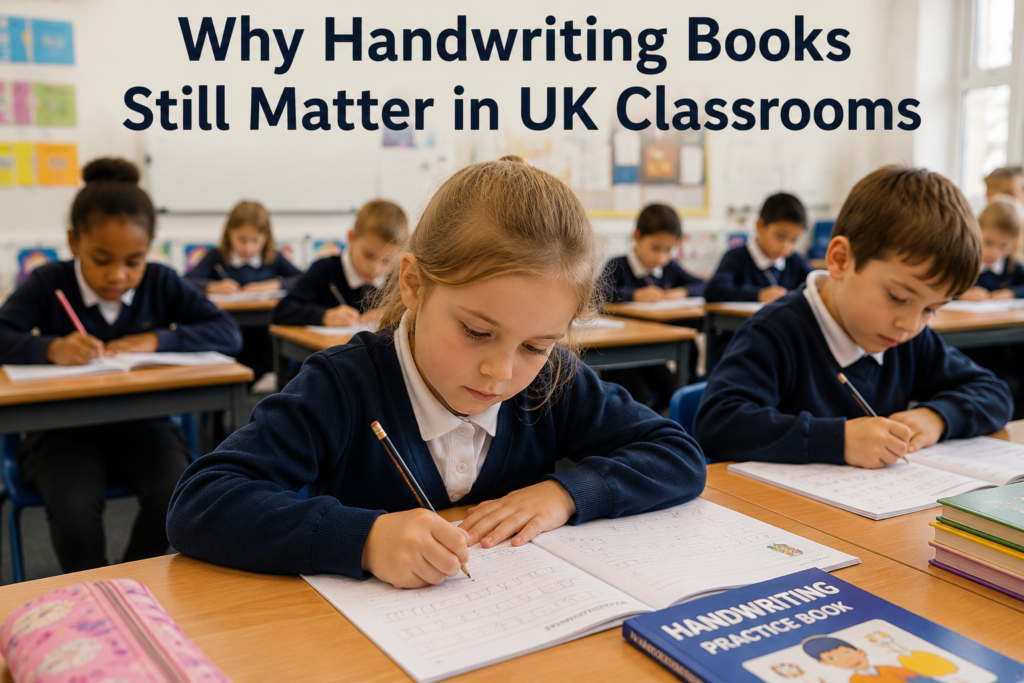

In a school day full of digital tools, printed worksheets and online learning platforms, handwriting can sometimes feel like an old-fashioned skill. In reality, it remains one of the most important foundations for learning, especially in primary education. Children still need to write in exercise books, complete assessments, take notes, practise spelling, record ideas and show their understanding across different subjects.
Handwriting is not only about neat presentation. It helps pupils build fine motor control, spelling confidence, sentence structure and written fluency. When a child can write clearly and comfortably, they are more likely to concentrate on what they want to say rather than struggle with the physical act of writing.
For teachers, handwriting also gives a clear view of pupil progress. It can show how well children are forming letters, spacing words, using lines and building writing stamina. This is why the right books can make such a difference.
Choosing the Right Books for Daily Writing Practice
Schools looking for handwriting books need resources that support pupils at different stages of development. In Class Tomorrow supplies a wide range of school exercise books and handwriting books for UK classrooms, helping teachers choose formats that suit younger pupils, older primary pupils and targeted writing support groups.
The best handwriting books give pupils clear guidance on the page. Younger children may need wider lines and guide spaces to help them understand where each part of a letter should sit. Tall letters, small letters and letters that drop below the line can be difficult for children to judge without visual support.
As pupils become more confident, they may move on to narrower lines that encourage smaller, neater and more controlled writing. This gradual change helps children develop fluency while still keeping their work readable.
Supporting Letter Formation
Good handwriting starts with letter formation. If children form letters incorrectly early on, it can become harder to correct later. Handwriting books provide a useful structure for regular practice, helping pupils repeat shapes and patterns until they become more natural.
Teachers can use handwriting books for letter families, joins, common words, spelling patterns and short sentence work. This regular practice helps pupils improve without needing long sessions. Even five or ten minutes a day can make a noticeable difference over time.
For pupils who find writing difficult, clear handwriting lines can reduce frustration. Instead of worrying about where to place each letter, pupils have a guide that helps them organise their writing on the page.
Building Writing Stamina
As pupils move through school, they are expected to write more. They may need to produce stories, explanations, reports, science observations, history answers and longer pieces of independent work.
If handwriting is slow or uncomfortable, pupils may write less than they are capable of. They may shorten answers, avoid detail or become tired quickly. Handwriting books help pupils build stamina through regular practice in a controlled format.
Over time, writing becomes easier. Pupils can focus more on ideas, vocabulary, punctuation and structure because they are no longer putting all their effort into forming each word.
Helping Teachers Track Progress
One of the benefits of handwriting books is that they create a clear record of development. Teachers can look back through earlier pages and compare them with more recent work. This makes it easier to spot improvement in letter size, spacing, joins and general presentation.
This record can also help during parent meetings, intervention reviews or discussions with support staff. Instead of relying only on comments, teachers can show clear examples of progress.
For pupils, seeing their own improvement can be motivating. A child who struggled at the start of the term may feel proud when they look back and see how much clearer their handwriting has become.
Useful for Whole-Class and Small-Group Work
Handwriting books can be used in several ways. Some schools use them across whole year groups as part of a consistent handwriting scheme. Others use them for small-group interventions or individual support.
Whole-class use helps create shared expectations. Everyone works with the same line style, which makes modelling easier for teachers. Small-group use can help pupils who need extra practice with pencil control, letter formation or spacing.
They are also useful for pupils who are new to English or who need additional confidence with written tasks. The structure of the page gives them one less thing to worry about.
Why Schools Should Plan Ahead
Handwriting books are used regularly, so schools benefit from ordering enough stock for the full term or year. Running out halfway through a handwriting programme can disrupt routines and make it harder to keep progress consistent.
Bulk ordering also helps schools keep the same format across classes. This is useful when pupils move between groups or when teaching assistants support different pupils.
In Class Tomorrow is a practical supplier for schools because it offers handwriting books alongside exercise books, stationery, paper, classroom resources and art supplies. This allows school offices to order key classroom items in one place.
A Small Resource With a Big Impact
Handwriting books may seem simple, but they support a skill pupils use every day. They help children build control, confidence and independence in their written work.
For teachers, they make handwriting practice easier to plan and assess. For pupils, they provide structure and a sense of progress. For schools, they are a cost-effective resource that supports learning across the curriculum.
Even as technology becomes a bigger part of education, handwriting still matters. With the right books and regular practice, pupils can develop writing skills that support them throughout school and beyond.