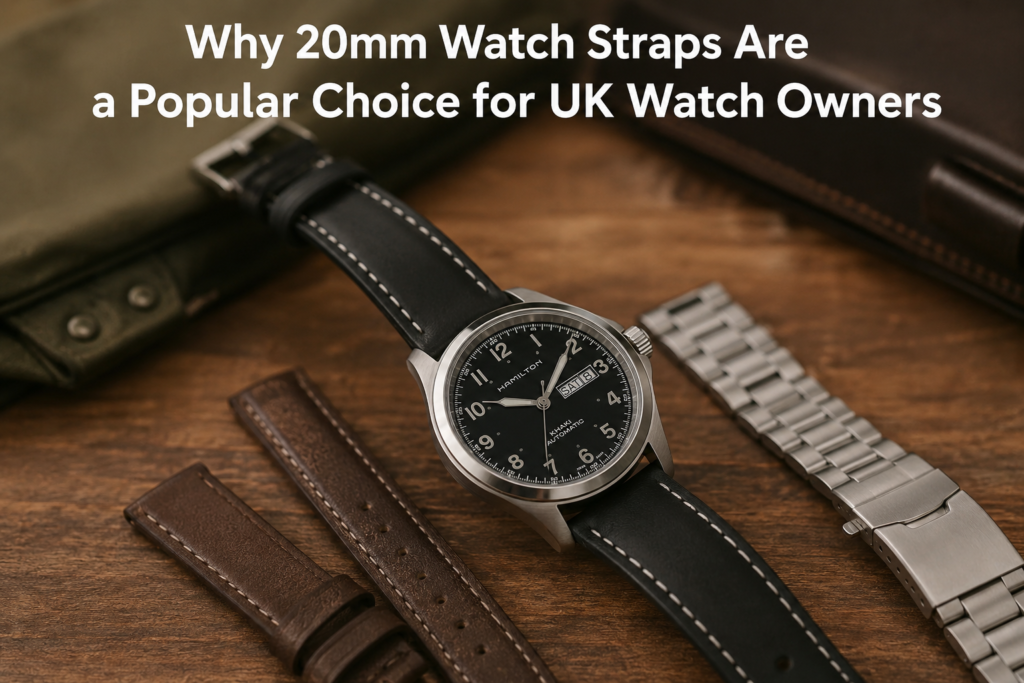

A watch can last for many years, but the strap often needs replacing much sooner. This is normal. Straps deal with movement, moisture, skin contact, weather and daily wear. Over time, leather can crack, rubber can split and fabric can fray.
For many watch owners, 20mm is the size they need. It is one of the most common lug widths and appears on many popular watch styles. This makes it a useful size for people who want to refresh a watch without replacing it.
Changing the strap can improve the look and feel of a watch quickly. It can make a smart watch more casual, a sports watch more wearable or an older watch more comfortable. The key is choosing a strap that fits properly and suits the way the watch is used.
The Benefit of a Common Strap Size
If your watch uses 20mm watch straps, you will usually have a wide choice of materials, colours and finishes. This makes it easier to find a strap that suits your watch and your personal style.
A common size also makes it easier to build a small strap collection. You might use leather during the working week, rubber at weekends and nylon for holidays or casual wear. This gives one watch more flexibility.
The strap still needs to be measured carefully. A 20mm strap is designed to fit a 20mm lug width. If the watch has a different measurement, even by 1mm, the fit may not look right. Always measure the inside gap between the lugs before ordering.
Leather for Work and Smart Casual Wear
Leather is a strong choice if you want your watch to look smarter. It pairs well with work clothing, formal outfits and simple casual looks. Black leather is the most formal option and works well with silver, black or white dials.
Brown leather gives a warmer look. It works well with navy clothing, tweed, denim, boots and casual jackets. Tan leather can be a good choice for lighter outfits, especially in spring and summer.
Texture changes the feel of the strap. Smooth leather looks classic. Grained leather is more relaxed. A padded strap can suit larger watches, while slim leather is usually better for dress watches.
If your watch is worn mainly indoors or for office use, leather is often a reliable option. If the watch is regularly exposed to water, a different material may be better.
Rubber for Wet Weather and Active Days
Rubber straps are popular for practical reasons. They are easy to clean, comfortable for active use and better suited to water than leather. This makes them a good option for dive watches, sports watches and everyday watches worn in all conditions.
UK weather can be unpredictable, so a rubber strap is useful if you walk, commute, travel or spend time outdoors. It is also a good option for holidays and exercise.
A black rubber strap gives a clean look and suits many watch cases. Coloured rubber can work well, but it is usually best when it matches details on the dial, bezel or hands.
Nylon for Relaxed Everyday Style
Nylon straps are light, comfortable and easy to wear. They are often chosen for casual watches and outdoor use. A nylon strap can make a watch feel less formal and more suitable for weekends.
Plain colours are the easiest to wear. Black, grey, navy and green are useful options. Striped straps can add interest, but they should still work with the watch face.
Nylon straps are also practical if you like changing the look of a watch regularly. They are usually easy to swap and can be a good entry point for people who want to experiment with different styles.
Choosing the Right Colour
Colour should be chosen around the watch case, dial and clothes you wear most often. Black is safe and smart. Brown is warm and versatile. Navy works well with blue dials and casual clothing. Grey is a good neutral choice.
If the watch has a coloured second hand, bezel marking or dial detail, the strap can pick up that colour. This can make the watch look more considered without being too loud.
Avoid choosing a strap colour only because it looks good on its own. It needs to work with the watch first.
Comfort and Fit
Comfort is just as important as style. A strap can look good but still be wrong if it is too stiff, too thick or too long.
Check the strap length as well as the width. If you have a smaller wrist, some standard straps may leave too much excess. If you have a larger wrist, check that the strap will fasten comfortably.
The underside of the strap also matters. A soft lining can make a big difference when the watch is worn all day.
Quick Release Options
Quick release straps are useful if you want to change straps without tools. They use a small lever on the spring bar, allowing the strap to be removed and fitted by hand.
This is ideal if you want different straps for work, weekends and holidays. It also reduces the risk of scratching the lugs during strap changes.
Watch Obsession stocks watch straps, tools and accessories, which can help if you want to change straps at home.
Final Thoughts
A 20mm strap gives watch owners plenty of choice. It is a practical size that works across many styles, making it easier to refresh a watch without buying a new one.
The best strap is the one that fits correctly, feels comfortable and suits your routine. Measure carefully, choose the right material and think about how often the watch will be worn. A well-chosen strap can make a watch feel better immediately.